Drug companion protocol
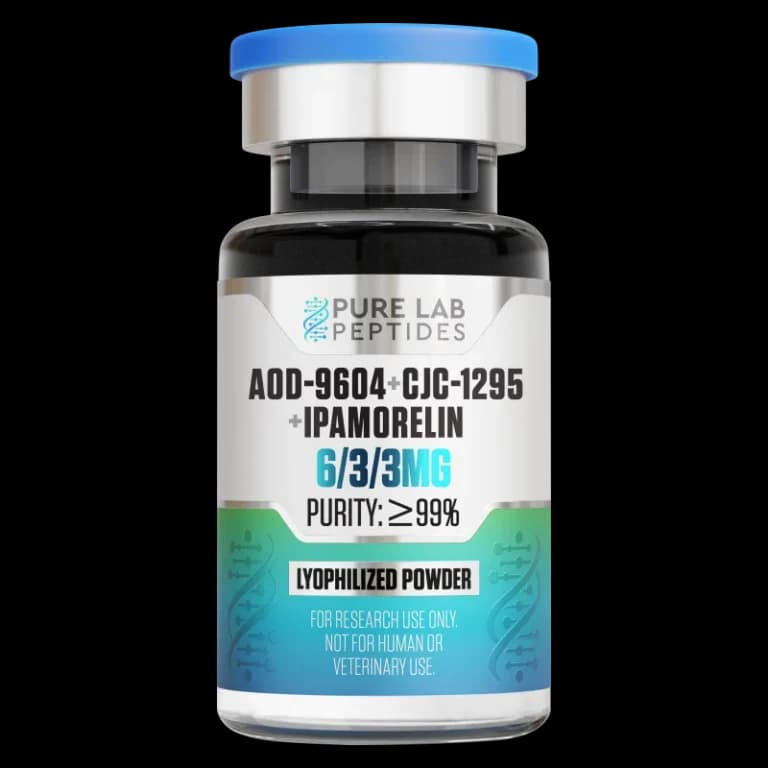
AOD-9604
A synthetic fragment of human growth hormone (hGH176-191) investigated for its potential effects on fat metabolism.
Quickstart Highlights
- Drug class
- Synthetic peptide (GH fragment)
- Route
- Subcutaneous injection
- Schedule
- Research compound; not approved for human therapeutic use
- Evidence score
- 15
Quickstart highlights
- 💉Subcutaneous injection
- 🔬Synthetic peptide (GH fragment)
- 📋Prescription required
How this works
Mechanism of action and pharmacokinetic profile from published data.
AOD-9604 is a synthetic 16-amino-acid fragment of human growth hormone (hGH), corresponding to residues 176–191 of the hGH sequence. In preclinical studies, it demonstrated fat-mobilising (lipolytic) effects without the growth-promoting and insulin-resistance effects of the full hGH molecule. In Australia, AOD-9604 was briefly listed as a food ingredient before the TGA reviewed its classification and removed it from the food ingredients register. Human clinical trial evidence is limited: early Phase 2 trials in obesity showed modest body-weight effects, and the development programme was discontinued before Phase 3 completion.
- Time to peak (Tmax)
- Not characterised from published human PK studies.
- Clearance
- Proteolytic degradation expected; no regulatory-standard PK profile exists.
- Elimination half-life
- Not formally established. Phase 1/2 trial data suggest a short plasma half-life consistent with a small peptide.
- Bioavailability
- Phase 2 trials used oral and subcutaneous routes. Oral bioavailability of intact peptide is expected to be low; trial data are not publicly reported in sufficient detail.
Dosing overview
Structured dosing phases exposed through the public drug API.
No approved human protocol
| Phase | Dose | Frequency | Guidance |
|---|---|---|---|
| No approved dose Week 0+ | Protocol specific | See source | No regulator-approved human dosing or escalation schedule exists. Do not treat online dose tables as validated medical protocols. |
Your journey
Where you are in a typical protocol, and what one dose cycle looks like. Educational — your prescriber tailors the plan to you.
Protocol timeline
Investigational phase (no approved schedule)
Weeks 1+What to expect: AOD-9604 has no approved therapeutic dosing schedule for human use, Published Phase 2 trials explored oral and subcutaneous routes at varying doses; no standard regimen was established, The development programme was discontinued before Phase 3; no peer-reviewed maintenance schedule exists, Any use outside an approved clinical trial is unregulated and lacks a formal efficacy or safety profile
Focus on: Understand that AOD-9604 is not approved by the TGA, FDA, MHRA, or EMA for any therapeutic purpose, Any use should occur only within the context of an approved clinical trial or under direct medical supervision, Report any unexpected symptoms promptly to your prescriber or trial team, Do not source this compound from unregulated or compounding suppliers without explicit medical oversight
Common adjustments: Dose, frequency, and route varied across published studies — no titration ladder has been validated, A clinical trial investigator or prescriber operating within a registered study would determine any protocol adjustments
Clinical Benefits & Side Effects
Observed outcomes, adverse effects, and lifecycle considerations from published trial data.
Benefits
No approved human dosing protocol exists
AOD-9604 development as a weight-management drug was discontinued before completing Phase 3. There is no approved dose, schedule, or monitoring protocol. Human trial data from Phase 2 obesity studies showed modest effects that were not compelling enough to advance.
Getting started and finding your footing
This is your very first week, and the most important thing right now is simply showing up and building the habit of your injection routine. Your body is being introduced to something new, so don't be surprised if you notice mild redness or tenderness at the injection site — this is very common. There are unlikely to be any visible physical changes yet, and that's completely normal; this week is all about starting well.
Settling into your injection routine
By now your injection technique is likely feeling a little more familiar, even if it still feels a bit daunting. Some people notice mild fatigue or a subtle change in appetite around this time, while others feel no different at all — both are normal. Keep your expectations grounded; meaningful changes in body composition take time, and consistency now is what lays the foundation.
Staying consistent through the early stage
Week three can be one of the trickier weeks — you're past the novelty of starting but results aren't visible yet, which can feel discouraging. Some people report mild gastrointestinal discomfort, such as nausea or bloating, particularly around their injection window. Stick with it, keep your hydration and nutrition dialled in, and remember that what's happening right now may not be visible but it matters.
Completing your first month — a real milestone
Finishing your first four weeks is genuinely worth acknowledging — building any new health habit is hard, and you've done it. Nausea or mild digestive sensitivity may still come and go, especially on injection days, and that's still within the normal range of experiences at this stage. You might not see dramatic changes in the mirror yet, but your consistency is doing real work.
Dose adjustment may begin — stay the course
If your prescriber has recommended a dose adjustment this week, you may notice side effects like nausea or fatigue becoming slightly more noticeable again as your body adapts — this often settles within a few days. Some people begin to notice a subtle shift in appetite or food cravings around this time. Follow your prescriber's instructions carefully and report any concerns rather than adjusting things on your own.
Appetite changes becoming more noticeable
Many people start to notice they feel satisfied with smaller portions or find that certain foods are less appealing than they used to be. This is a good opportunity to be intentional about what you're eating — leaning into protein-rich, nutritious foods will help your body make the most of these changes. If nausea is still a factor, small, frequent meals are often much easier to manage than large ones.
Building momentum with new eating patterns
By week seven, many people find their new eating rhythm is beginning to feel more natural and less forced. It's worth checking in with yourself about energy levels, sleep quality, and how your clothes are fitting — these non-scale markers can be really encouraging when the number on the scales feels slow to move. Keep up your movement routine and be kind to yourself on harder days.
Lifecycle factors
The development programme was discontinued
AOD-9604 completed Phase 2 obesity trials but was not taken to Phase 3 by its developer. This is not the same as being proven safe and effective — it means the evidence threshold for a serious weight-management medicine was not met.
TGA food-ingredient classification was revoked
AOD-9604 was briefly listed in Australia as a food ingredient. The TGA reviewed its classification and removed it from the food ingredients register because it did not meet the criteria. It is not a food ingredient and it is not a licensed medicine.
Store your compound correctly and check it before use
Follow your prescriber's instructions for storage — most compounded peptides need to be kept refrigerated and away from light. Before each use, visually inspect the solution: it should be clear and free of particles or discolouration. If anything looks off, don't use it — contact your prescriber or the compounding pharmacy. Never use a preparation past its expiry date or if it has been stored incorrectly.
Keep a simple symptom log to share with your prescriber
Take 60 seconds after each injection to jot down a quick note — what time you injected, how you felt in the hours after, any nausea, fatigue, or injection-site reactions. Even a note in your phone's notes app works perfectly. This kind of simple log makes your check-in conversations with your prescriber far more useful and means nothing gets forgotten between appointments.
Important note
This content is intended for therapeutic educational purposes only and does not constitute medical advice, diagnosis, or treatment. All information presented is based on published clinical trial data. Always follow your prescriber's instructions.
Nutrition & practical guidance
Food, hydration, and adherence tips compiled from trial data and clinical companion content.
Food and hydration
✅ Prefer
⚠️ Limit
❌ Avoid
💧 Hydrate
Adherence tips
Rotate your injection sites consistently
Inject into the subcutaneous tissue of your abdomen, thigh, or upper arm as directed by your prescriber, and rotate between spots each time to reduce the chance of localised irritation or lumps under the skin. A simple way to do this is to mentally divide your abdomen into a grid and work your way around it. Keep each new injection site at least 1–2 cm away from the last. Follow your prescriber's instructions on technique and site selection.
Let your injection warm to room temperature first
If your compound is stored in the fridge, take it out 10–15 minutes before injecting to allow it to reach room temperature. Injecting a cold solution can increase discomfort and stinging at the site. Never use a microwave or hot water to speed this up — simply leave it on the bench while you prepare everything else.
Inject at the same time each day to build your habit
Choosing a consistent time for your injection — many people prefer first thing in the morning before breakfast — makes it much easier to remember and helps your body adapt to a predictable rhythm. Set a phone reminder with a label like 'morning routine' until it becomes automatic. Follow your prescriber's instructions about the optimal timing for your individual situation.
Keep injection days lighter on the plate
Many people find that eating lighter, low-fat meals in the few hours before and after their injection noticeably reduces nausea. Think a small bowl of oats with fruit for breakfast, or a piece of wholegrain toast with a boiled egg, rather than a big cooked meal. You can eat more normally once you're confident how your body responds.
Disclose to your doctor
Any unregulated compound should be declared to your prescriber — particularly relevant if you are using other medicines, planning surgery, or being investigated for a health condition.
Start every morning with a full glass of water
Before your morning coffee, before breakfast, before anything — drink a 250–300 mL glass of water as the very first thing you do each day. This simple habit kickstarts your hydration and has been shown to support appetite regulation. Keep a large (750 mL–1 L) bottle on your desk or bench as a visual reminder to keep drinking throughout the day.
Sip ginger or peppermint tea when nausea hits
Rather than reaching for food when you feel queasy, try sipping a warm cup of ginger or peppermint herbal tea — both are widely available at Australian supermarkets and have a well-established reputation for settling an unsettled stomach. Drink it slowly over 15–20 minutes. Keeping tea bags in your bag or at your desk means you're never caught without a go-to nausea remedy.
Aim for 25–35g of protein at every main meal
When your appetite is reduced, it's easy to undereat protein without realising it — and protein is especially important for preserving muscle while your body composition is changing. Practically, 25–35g of protein looks like a 120–150g chicken breast, two eggs plus a tin of tuna, or a cup of Greek yoghurt with cottage cheese. Use the palm of your hand as a rough guide: one palm-sized serve of a protein-rich food per meal is a solid starting point.
Eat small meals every 3–4 hours rather than skipping
When appetite is suppressed, skipping meals might feel natural — but going too long without eating can worsen nausea, drop your energy, and make it harder to meet your nutritional needs. Set a gentle alarm to eat something small every 3–4 hours, even if it's just a small tub of yoghurt, a handful of nuts, or a piece of fruit. Keeping easy, nourishing snacks visible and accessible at home makes this much easier to stick to.
Start with 20–30 minute walks and build from there
You don't need to overhaul your exercise routine all at once — even a 20–30 minute walk most days is a meaningful contribution to your goals and is well-tolerated by most people in the early weeks. Aim to gradually build toward 150 minutes of moderate movement per week, as per Australian physical activity guidelines. If you feel fatigued on injection days, it's fine to make those your lighter days and move more on others.
Include two resistance training sessions per week
Resistance or strength training — whether that's weights, bodyweight exercises, or resistance bands — is one of the most effective ways to support lean muscle while working toward body composition changes. Two sessions per week of 30–45 minutes is a realistic and achievable target for most people. If you're new to strength training, a session with a qualified exercise physiologist or personal trainer can help you start safely and confidently.
Protect 7–9 hours of sleep as part of your programme
Sleep quality has a significant and direct impact on hunger hormones, energy levels, and the body's ability to manage fat metabolism — so it's not optional. Aim for 7–9 hours per night and try to keep your wake and sleep times consistent, even on weekends. If you're finding sleep difficult, reducing screen exposure in the hour before bed and keeping your bedroom cool (around 18–20°C) are two changes that make a measurable difference for many people.
Track non-scale wins alongside your weight
The number on the scale is just one data point, and it doesn't always reflect what's actually happening in your body — especially in the early weeks. Keep a simple weekly note of other markers: how your clothes fit, your energy at 3pm, how far you walked, your sleep quality, or how you handled a stressful day around food. These 'non-scale victories' are often more motivating and more meaningful than a number, and they help you see the bigger picture when weight loss is slower than you'd like.
Be honest about hard weeks — they don't erase progress
There will be weeks where you feel lousy, where nausea gets the better of you, or where you eat in a way that doesn't align with your goals. This is part of the process for almost everyone, and a difficult week doesn't undo what came before it. What matters most is how quickly you return to your routine — not whether you had a perfect run. Try keeping a brief one-line journal entry each day: even 'today was hard but I'm still here' counts as progress.
Daily companion
Practical playbooks for managing symptoms, eating around side effects, tracking what matters, and reporting back to your clinician.
Symptom playbooks
Injection-site reaction
Mild reaction
Nutrition: No specific dietary modification required, Maintain adequate general nutrition to support skin healing
Hydration: Stay well hydrated — aim for at least 2 L of water per day unless otherwise directed
Avoid: Scratching or rubbing the injection site, Applying unverified topical products to the site without medical advice
Moderate reaction
Nutrition: No specific dietary modification required, Ensure adequate protein and micronutrient intake to support tissue integrity
Hydration: Maintain fluid intake of at least 2 L per day
Avoid: Re-injecting into the same site until fully resolved, Applying heat or ice without clinical guidance
⚠ Contact your prescriber or trial team if redness, swelling, or pain worsens or does not begin to improve within 48 hours.
Severe reaction
Hydration: Maintain hydration while seeking medical review
Avoid: Further injections until assessed by your prescriber
⚠ Seek urgent medical attention if you experience spreading redness, warmth, significant swelling, pus, fever, or signs of allergic reaction (hives, difficulty breathing, facial swelling).
Nausea
Mild nausea
Nutrition: Eat small, frequent meals — every 2–3 hours if helpful, Choose bland, low-fat foods such as plain crackers, toast, or rice, Ginger-containing foods or teas may offer comfort for some people
Hydration: Sip fluids slowly throughout the day rather than drinking large volumes at once, Cold or room-temperature water is often better tolerated than hot drinks
Avoid: Fatty, fried, or strongly spiced foods, Large meals in a single sitting
Moderate nausea
Nutrition: Prioritise bland, easily digestible foods, If eating is difficult, try liquid nutrition such as diluted fruit juice, clear soups, or electrolyte drinks
Hydration: Aim to maintain at least 1.5–2 L of fluid per day, Oral rehydration solutions may help if fluid intake is reduced
Avoid: Alcohol, Dairy-heavy meals, Strong food odours where possible
⚠ Contact your prescriber or trial team if nausea persists beyond 24–48 hours or prevents adequate fluid intake.
Severe nausea
Nutrition: Focus on maintaining any oral intake possible; even small sips are beneficial
Hydration: Seek medical guidance promptly — intravenous fluid support may be needed if oral intake is not possible
Avoid: Solid foods until vomiting has subsided
⚠ Seek urgent medical attention if you are unable to keep fluids down for more than 12 hours, feel faint, or show signs of dehydration (dark urine, dry mouth, dizziness).
Food guidance by situation
Prefer: Plain crackers, dry toast, or plain rice, Ginger tea or ginger biscuits, Cold or room-temperature fluids, Clear broths or soups
Limit: Dairy-heavy foods, High-fat snacks
Avoid: Fatty or fried foods, Strongly spiced dishes, Alcohol
Bland, low-fat foods are generally better tolerated when nausea is present and place less demand on gastric motility.
Prefer: Nutrient-dense small portions — e.g. nut butter on toast, yoghurt, eggs, Fortified drinks or smoothies if solid food is unappealing, Foods with familiar, mild flavours
Limit: Skipping meals entirely — even small amounts of food help maintain energy and muscle mass
Avoid: Replacing meals with nutrient-poor options such as confectionery or soft drinks
Maintaining adequate caloric and protein intake is important; small frequent meals can help when appetite is reduced.
What to track
Suggested check-in cadence: weekly.
How would you rate your nausea over the past week? (0 = none, 10 = worst imaginable)
scale 0 10
How would you rate your appetite over the past week? (0 = no appetite at all, 10 = completely normal appetite)
scale 0 10
How would you rate your energy levels over the past week? (0 = extremely fatigued, 10 = normal energy)
scale 0 10
What is your current weight? (kg) (kg)
decimal
Have you had any redness, swelling, or pain at the injection site this week? (0 = none, 10 = severe)
scale 0 10
Have you noticed any new or unexpected symptoms this week? Please describe briefly.
text
Take this to your appointment
Medication context: Investigational synthetic peptide (GH fragment 176–191) — not approved for therapeutic use (TGA, FDA, MHRA, EMA)
Key metrics: Weight (kg) — weekly trend, Injection-site reaction severity (0–10 scale), Nausea severity (0–10 scale), Energy level (0–10 scale), Appetite (0–10 scale), Any new or unexplained lumps, lesions, or swellings, Source and batch information of compound used (if available), Frequency and route of administration as reported by patient
Relevant symptoms: Injection-site reactions (redness, swelling, pain, induration), Allergic or hypersensitivity reactions, Nausea or vomiting, Fatigue or energy changes, Unexplained new lesions or lumps (given theoretical growth-related concern), Any new or unexpected symptoms since last review
Safety and interactions
Share this information with your prescriber for personalised care decisions.
Red-flag symptoms — seek urgent care
- Signs of severe allergic reaction (anaphylaxis)EmergencyCall 000 immediately if you experience hives, swelling of the face or throat, difficulty breathing, or a sudden drop in blood pressure after an injection. This may be a life-threatening allergic reaction.
- Severe or spreading injection-site infectionUrgent careSeek urgent medical attention if an injection site becomes increasingly red, hot, swollen, or painful, or if you develop a fever. These may be signs of a serious skin infection (abscess or cellulitis).
- Unexplained lump, swelling, or rapidly growing lesionContact prescriberContact your prescriber promptly if you notice any new unexplained lump, swelling, or rapidly growing lesion anywhere on your body. GH-fragment peptides carry theoretical growth-related concerns, and any such finding warrants medical review.
- Persistent vomiting or inability to keep fluids downUrgent careSeek urgent medical attention if you have been vomiting continuously for more than 12 hours or are unable to keep any fluids down. Dehydration can become serious quickly.
- Fainting, severe dizziness, or loss of consciousnessEmergencyCall 000 immediately if you faint, lose consciousness, or experience sudden severe dizziness. Do not attempt to drive.
- Use of compound sourced outside an approved clinical trialContact prescriberAOD-9604 is not approved for therapeutic use in Australia or internationally. If you are using a compound obtained outside an approved clinical trial, discuss this with your prescriber as soon as possible. Unregulated peptide products may not be what they claim to contain.
- Any unexpected systemic reaction. Any unexpected systemic reaction (rash, swelling, breathing difficulty, chest pain, fainting) after using a non-approved peptide is a red flag - stop use and seek urgent medical care.
- Severe allergic reaction. Seek emergency medical attention immediately if you experience difficulty breathing, swelling of the face, lips, tongue or throat, rapid heartbeat, or a widespread rash after administration. Serious allergic reactions to peptide compounds can be life-threatening.
Structured warnings
Not an approved medicine
AOD-9604 is not approved for weight management or therapeutic use. No regulator-approved dosing or monitoring standard exists.
Development programme did not reach approval
Early obesity development did not produce a licensed medicine. Treat online dosing claims as unvalidated.
Any unexpected systemic reaction
Any unexpected systemic reaction (rash, swelling, breathing difficulty, chest pain, fainting) after using a non-approved peptide is a red flag - stop use and seek urgent medical care.
Not approved for therapeutic use
AOD-9604 is not approved by the TGA, FDA, MHRA, or EMA for any therapeutic indication. There is no licensed prescribing information. Any use outside an approved clinical trial is unregulated and carries unknown risks.
Severe allergic reaction
Seek emergency medical attention immediately if you experience difficulty breathing, swelling of the face, lips, tongue or throat, rapid heartbeat, or a widespread rash after administration. Serious allergic reactions to peptide compounds can be life-threatening.
Active malignancy — theoretical risk
Growth hormone–related peptides carry a theoretical concern regarding stimulation of tumour growth. People with a current or recent history of malignancy should not use this compound outside a supervised clinical trial.
Active or prior malignancy
GH-fragment peptides carry a theoretical concern regarding growth-related pathways. Inform your prescriber of any personal or family history of cancer, active malignancy, or unexplained tumour before use.
Pregnancy, breastfeeding, and paediatric use
AOD-9604 has not been studied in pregnant or breastfeeding individuals, or in children and adolescents. Safety in these populations is entirely unknown; use should be avoided.
Pregnancy and breastfeeding
AOD-9604 has not been studied in pregnant or breastfeeding individuals. Effects on the developing foetus or infant are entirely unknown. Discuss with your prescriber before use if you are pregnant, planning pregnancy, or breastfeeding.
Children and adolescents
AOD-9604 has not been studied in people under 18 years of age. Effects on growth and development are unknown. Use in this population is not supported by any clinical evidence.
Severe organ impairment
The effects of hepatic, renal, or cardiac impairment on the metabolism and safety of AOD-9604 have not been studied. Use in people with severe organ impairment is not supported by any clinical evidence.
Children, adolescents, and severe organ impairment
AOD-9604 has not been studied in people under 18 years of age, or in those with severe hepatic, renal, or cardiac impairment. Safety and dosing in these populations are unknown.
Compounded and unverified products
Products marketed as AOD-9604 outside a regulated clinical trial setting are not subject to pharmaceutical quality, purity, or sterility standards. Contaminated or mislabelled products pose additional unknown risks. Notify your prescriber of any unexpected symptoms following use.
Unregulated supply and compounding risks
AOD-9604 is frequently sold through unregulated channels. Products obtained outside approved clinical trials have not been assessed for purity, potency, or sterility, and may pose additional safety risks. Discuss any use with your prescriber.
Indication and approval status
No approved therapeutic indication.
No approved human prescribing population.
Who should not take this
AOD-9604 is not approved by the TGA, FDA, MHRA, or EMA for any therapeutic use. The TGA reclassified and removed AOD-9604 from the food-ingredient register. It is not a licensed medicine. No formal contraindications have been established because no approved prescribing label exists. General cautions: • Active malignancy — GH-fragment peptides have theoretical growth-related concerns • Pregnancy or breastfeeding — not studied • Children and adolescents — not studied • Severe organ impairment — not studied Any use outside an approved clinical trial is unregulated.
Known interactions
- Insulin and antidiabetic agentsunknown
Preclinical fat-metabolism effects could theoretically interact with insulin sensitivity. No human interaction data exist.
- Growth hormone therapyunknown
Structural overlap with hGH fragment — theoretical interaction unknown; not studied in combination.
Missed-dose guidance
No regulator-approved missed-dose rule exists for AOD-9604.
There is no validated human dosing schedule to resume; discuss any use with a clinician.
When to seek help
Any unexpected symptom after using an unapproved research peptide.
Stop use and disclose the product to a clinician, including vial/source details.
Side-effect timing windows
Population typicals from trial data — individual experience varies.
Injection-site reaction (redness, swelling, or discomfort)
Onset 0–2 h · Peak 1–6 h · Resolves ~2d
Local reactions at the injection site have been noted in peptide trials. Timing estimates are extrapolated from general subcutaneous peptide literature; no AOD-9604-specific controlled timing data are publicly available. Persistent or worsening reactions should be reported to your prescriber.
Injection-site reaction
Onset 0–1 h · Peak 1–6 h · Resolves ~2d
Localised redness, swelling, or discomfort at the injection site is a commonly reported effect with subcutaneous peptide injections. Timing is estimated from general subcutaneous peptide trial data; no formal AOD-9604-specific PI timing data are publicly available. Clinical editor should verify.
Approved injection sites
Abdomen
Rotate injection sites within the abdominal region, keeping each new injection at least 2–3 cm from the previous site, the navel, and any scars or bruised areas.
Avoid: Avoid areas that are bruised, scarred, inflamed, or hardened from previous injections.
Thigh
Use the outer, middle third of the thigh. Rotate sites within this region to minimise local tissue reactions.
Avoid: Avoid the inner thigh and any areas with visible veins, scars, or lumps.
Upper arm
Use the outer aspect of the upper arm. Rotation within this area is advised if used repeatedly.
Avoid: Avoid the deltoid muscle itself and any areas with obvious bruising or swelling. Note that self-injection at this site may be difficult.
Structured storage
research peptide
lyophilized/reconstituted research preparation
No approved standard
No licensed product standard exists; stability instructions from online suppliers are not regulator-approved.
Storage and handling
AOD-9604 is not a licensed pharmaceutical product. It is sold as a research chemical or compounded preparation. No regulatory storage standards apply. If handling a research preparation: • Lyophilised powder: store at −20°C or cooler; avoid repeated freeze-thaw cycles. • Reconstituted solution: store at 2–8°C, use promptly; stability is not formally validated. • Protect from light. These are general peptide research chemical guidelines — not TGA-approved storage instructions.
Research evidence
Published studies, labels, regulator pages, and curated protocol sources connected to this profile.
API source references
TGA AOD-9604 scheduling and food context
Australian regulator context for AOD-9604 classification and non-approved status.
Open source ↗AOD-9604 early obesity development context
Early human obesity development programme for hGH fragment 176-191; no approved Phase 3 outcome.
Open source ↗Get the full companion experience in Viora
Week-by-week reminders, food and symptom tracking, and the complete companion guide in one place.
Available on iOS and Android.