Drug companion protocol
Mazdutide
A dual GLP-1 / glucagon receptor agonist under clinical development for weight management and metabolic disease.
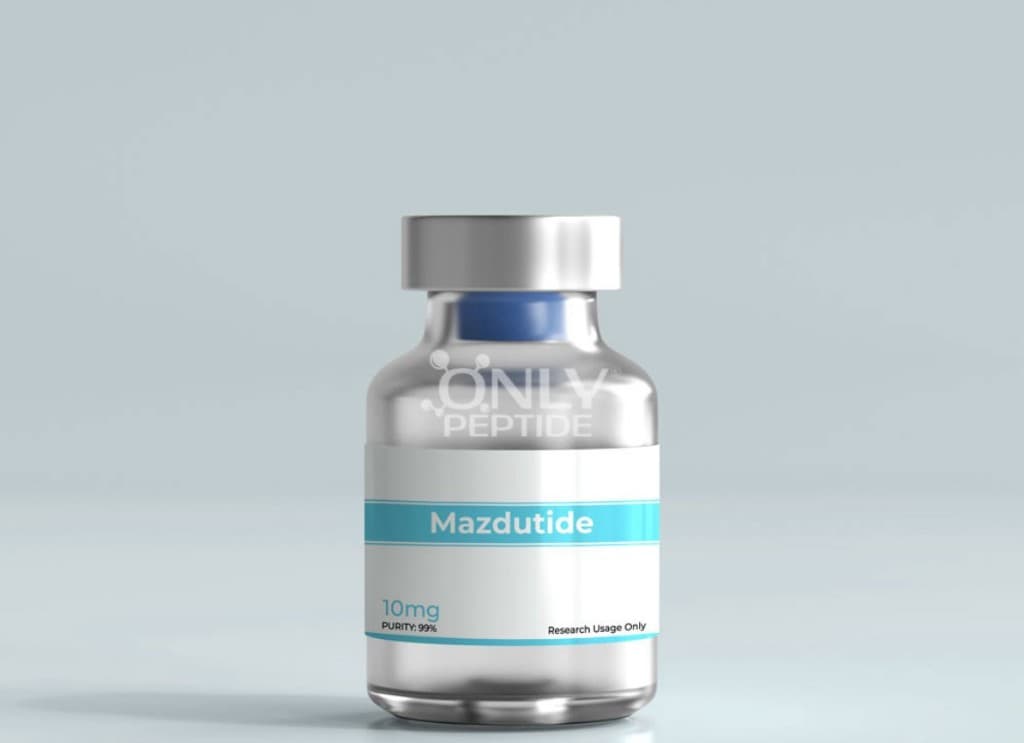
Quickstart Highlights
- Drug class
- GLP-1 / glucagon dual receptor agonist
- Route
- Subcutaneous injection
- Schedule
- Weekly subcutaneous injection
- Evidence score
- 42
Quickstart highlights
- 💉Subcutaneous injection
- 🔬GLP-1 / glucagon dual receptor agonist
- 📋Prescription required
How this works
Mechanism of action and pharmacokinetic profile from published data.
Mazdutide (also known as IBI362 or OXM3) is a dual GLP-1 / glucagon receptor agonist. Like retatrutide, it activates the glucagon receptor — which promotes energy expenditure, fat oxidation, and liver-fat reduction — alongside the GLP-1 receptor for appetite suppression and insulin regulation. Mazdutide is in clinical development primarily in China (Innovent Biologics), with Phase 3 trials underway in China and Phase 2 data published in the Lancet Diabetes & Endocrinology for type 2 diabetes.
Half-life
3.5 days
Tmax
2.5 days
Duration of action
7 days
- Time to peak (Tmax)
- ~48–72 hours after subcutaneous injection.
- Clearance
- Proteolytic degradation; full clearance characterisation is ongoing in Phase 3.
- Elimination half-life
- Approximately 3.5–4 days based on Phase 2 data; supports once-weekly or less-frequent dosing.
- Bioavailability
- Published from Phase 2 investigational data in Chinese populations; not yet on a product label for other regions.
Dosing overview
Structured dosing phases exposed through the public drug API.
Mazdutide Phase 2 reference
| Phase | Dose | Frequency | Guidance |
|---|---|---|---|
| Trial titration varies Week 0+ | Protocol specific | once weekly | Investigational/regional GLP-1/glucagon agonist; trial schedules vary by indication and region. Follow local label where approved or the active clinical trial protocol. |
Your journey
Where you are in a typical protocol, and what one dose cycle looks like. Educational — your prescriber tailors the plan to you.
Protocol timeline
Starter phase
Weeks 1–43 mgevery 7dWhat to expect: Early appetite reduction as GLP-1 receptor activity begins, Mild nausea or gastrointestinal discomfort is common during the first few weeks, Blood glucose levels may begin to change — monitor as directed by your trial site, Some people notice mild fatigue as the body adjusts
Focus on: Establish a consistent weekly injection day and time, Learn correct injection technique with your trial nurse, Begin tracking meals, symptoms, and energy levels, Report any persistent or severe abdominal pain to your trial site promptly
Common adjustments: Dose may be held at the starter level longer if gastrointestinal side effects are significant, Trial site may advise on small, frequent meals to manage nausea
Escalation phase
Weeks 5–124.5 mgevery 7dWhat to expect: Appetite suppression typically becomes more pronounced, Glucagon receptor activity may support increased energy expenditure and fat oxidation, Nausea may recur transiently with each dose step-up, Body weight reduction is typically more noticeable during this phase, Liver-fat changes may begin — trial monitoring will assess this
Focus on: Continue symptom tracking at each check-in, Prioritise adequate hydration and protein intake as appetite reduces, Attend all scheduled trial visits and blood tests, Report any new or worsening symptoms to your trial site between visits
Common adjustments: Dose escalation may be slowed or paused if GI tolerability is a concern, Trial site may adjust concurrent diabetes medications to reduce hypoglycaemia risk
Maintenance phase
Weeks 13+6 mgevery 7dWhat to expect: Weight and glycaemic effects may plateau or continue gradually, GI side effects often improve once the body has adjusted to the maintenance dose, Energy expenditure benefits associated with glucagon receptor agonism may continue, Ongoing trial monitoring assesses cardiovascular, renal, and hepatic parameters
Focus on: Maintain consistent injection timing each week, Focus on sustainable eating patterns and physical activity as advised, Continue attending all trial visits — do not miss scheduled assessments, Discuss any concerns about long-term tolerability with your trial site
Common adjustments: Some trial participants remain at a lower maintenance dose based on tolerability, Concurrent medications may be reviewed and adjusted by the trial team
One dose cycle at a glance
Population typicals, in hours from your dose — individual experience varies.
Onset
24 h
Peak effect
48–72 h
Appetite effect
24–120 h
Nausea risk
24–96 h
Constipation risk
48–168 h
Coverage fades after
168 h
Based on Phase 2 investigational data (Lancet Diabetes & Endocrinology, 2023): tmax approximately 48–72 hours post-subcutaneous injection; half-life approximately 3.5–4 days, supporting once-weekly dosing. PK characterisation is ongoing in Phase 3. Windows are population-typical estimates from published trial data — not derived from an approved product label. Individual variation is expected. All values sourced from investigational data in Chinese populations.
Clinical Benefits & Side Effects
Observed outcomes, adverse effects, and lifecycle considerations from published trial data.
Benefits
Investigational status
Mazdutide is approved in China and in Phase 3 trials there; it remains investigational elsewhere. Dosing, escalation, and monitoring are trial-protocol-specific.
First injection — taking the first step
You've taken a big step by starting your first injection. This week is all about getting familiar with the process and listening to your body. You may not notice much change yet — that's completely normal at this early, low starting dose.
Body begins adjusting to the medication
Some people start to notice mild nausea, especially after eating or in the hours following their injection. You might also feel a little more full than usual at mealtimes. These early signals are signs your body is responding — go gently with yourself.
Navigating nausea and early side effects
Nausea, tiredness, or loose stools are commonly reported around this time and can feel discouraging. Most people find these symptoms are manageable and begin to ease with small, simple meals. Hang in there — this phase is temporary for most people.
Completing your first month — finding your rhythm
You've made it through your first month — that's worth acknowledging! Side effects may still be present but often start to settle. The scale may not have shifted much yet, and that's okay; your body is still adjusting to the medication.
Dose may increase — appetite changes ahead
Depending on your prescriber's plan, your dose may be increased around this point. With a higher dose, you might notice a more noticeable reduction in appetite or earlier feelings of fullness at meals. Follow your prescriber's instructions closely during this escalation phase.
Appetite suppression becoming more noticeable
Many people report that food simply doesn't feel as appealing this week, or that they feel satisfied with much smaller portions. It's important to still eat regular, balanced meals — your body needs consistent fuel even when hunger signals are quieter.
Energy and mood may start to stabilise
As your body adapts to the higher dose, energy levels often begin to even out. Some people experience a second wave of nausea with dose escalation — eating slowly, avoiding rich foods, and staying well hydrated can help manage this.
Side effects
Common; most frequent at 6 mg
- Eat smaller, slower meals; choose bland lower-fat foods during escalation; avoid lying down soon after eating.Seek help: Contact your prescriber if nausea is severe, persistent, or prevents eating and drinking.
Reported
- Pause solid food briefly, sip fluids, and restart bland foods once settled; do not escalate dose while vomiting persists.Seek help: Seek urgent advice for repeated vomiting, dehydration, or inability to keep fluids down.
Reported
- Prioritise fluids and electrolytes; avoid alcohol, greasy meals, and very high-sugar drinks until symptoms settle.Seek help: Seek help if diarrhoea is severe, bloody, accompanied by fever, or causes dehydration.
Common; generally expected
Reported; generally mild
- Rotate sites, let alcohol dry before injecting, and avoid bruised, scarred, or hardened skin.Seek help: Seek advice for spreading redness, warmth, pus, fever, or severe pain.
Lifecycle factors
Mazdutide is investigational outside China
Phase 3 trials are underway in China and some early Phase 2 data are international; the drug does not have TGA, FDA, MHRA, or EMA approval. Any questions about access or participation should go to your trial site.
Glucagon co-activation distinguishes this class
The glucagon receptor component of dual GLP-1/glucagon agonists like mazdutide and retatrutide is thought to increase energy expenditure — a mechanism not present in pure GLP-1 agonists. Phase 2 data suggest this may be particularly effective for liver-fat reduction (NASH/MAFLD).
Store your medication correctly in the Australian climate
Australian summers can get extremely hot, and heat can degrade injectable medications quickly. Always store your pen in the fridge (typically **2–8°C**) and never leave it in a hot car, direct sunlight, or a warm bathroom cabinet. If you're travelling, use a medical-grade insulated travel pouch designed for injectable pens — these are available at most Australian pharmacies.
Important note
This content is intended for therapeutic educational purposes only and does not constitute medical advice, diagnosis, or treatment. All information presented is based on published clinical trial data. Always follow your prescriber's instructions.
Nutrition & practical guidance
Food, hydration, and adherence tips compiled from trial data and clinical companion content.
Food and hydration
✅ Prefer
⚠️ Limit
Adherence tips
Rotate your injection sites consistently
Always rotate between recommended injection areas — typically the abdomen (at least 5 cm from your belly button), front of the thigh, or upper arm. Rotating sites within each area each week helps prevent lumps or skin irritation building up at one spot. Keep a simple note on your phone or a sticky note on your pen to track where you last injected.
Let your pen reach room temperature before injecting
Injecting medication that's straight from the fridge can sting more and feel uncomfortable. Take your pen out of the fridge **15–30 minutes before** your scheduled injection and let it warm to room temperature. Never use a microwave or warm water to heat it — just leave it on the bench. Follow your prescriber's instructions for storage between uses.
Pick an injection day you can stick to every week
Choose a day of the week that works for your schedule — such as Sunday morning before breakfast or Wednesday evening — and stick to it. Consistency in timing supports steady medication levels in your body. Set a recurring weekly reminder on your phone so it becomes as automatic as charging your phone.
Consider injecting on a day before a lighter schedule
Some people feel slightly fatigued or nauseous in the 12–24 hours after their injection, especially in the early weeks. If possible, schedule your injection on a day before a lighter day — for example, Friday evening if you have a quieter Saturday. This gives your body time to adjust without impacting a busy work day.
Liver-fat reduction context
If you are in a mazdutide trial partly because of non-alcoholic fatty liver disease, your trial team may monitor liver enzymes and imaging. A low-fat, low-fructose dietary pattern is broadly recommended alongside pharmacotherapy for liver-fat reduction.
Start every morning with a full glass of water
Before coffee, before breakfast — drink a full 250–300 mL glass of water as the very first thing you do each morning. This simple habit kick-starts your hydration for the day and can help reduce that early-morning nausea some people experience. Keep a glass or water bottle on your bedside table the night before as a visual cue.
Sip water steadily — don't gulp large amounts at once
Drinking large quantities of water quickly can actually worsen nausea and feelings of bloating when your stomach is already sensitive. Instead, aim to **sip steadily throughout the day** — a few mouthfuls every 15–20 minutes. A 750 mL drink bottle is a practical tool for keeping track without counting glasses.
Prioritise protein at every meal, even small ones
When your appetite is reduced, it's easy to eat very little overall — but insufficient protein can lead to muscle loss over time. Aim to include a palm-sized serve of protein at each meal: eggs at breakfast, canned tuna or legumes at lunch, and chicken or tofu at dinner. Even small amounts of protein at each sitting add up and matter.
Eat smaller meals more frequently to manage nausea
Rather than three large meals, try shifting to **4–5 smaller eating occasions** across the day, especially in the first eight weeks. An empty stomach can sometimes make nausea worse, while overfilling it definitely will. Think of it as keeping the tank topped up rather than filling it to the brim.
Track non-scale victories alongside your weight
The number on the scale is only one small measure of progress — and it can be frustratingly slow in the early weeks. Keep a short weekly note (even in your phone's notes app) of other changes: energy levels, how your clothes feel, how far you walked, how you slept. These 'non-scale victories' often tell a much richer story of what's actually changing in your body.
Be patient with the early weeks — they're the hardest
The first four weeks are widely regarded as the most challenging part of starting a GLP-1-based medication. Side effects are at their most noticeable, results are least visible, and it can feel discouraging. Knowing this in advance can help you push through. Many people who persisted past week four report that things became significantly more manageable.
Start movement gently — a 20-minute walk counts
You don't need to join a gym or start an intense program. In the early weeks, a 20-minute walk at a comfortable pace — around the block or along a local path — is genuinely beneficial and appropriate. As your energy and confidence grow, you can gradually increase duration or intensity. Any consistent movement is far better than none.
Add light resistance exercise to protect muscle
Because weight loss from any method can reduce muscle mass, adding some resistance-based movement — like bodyweight squats, resistance bands, or light weights — 2–3 times per week is highly beneficial. It doesn't need to be intense; even a simple 15-minute home routine can make a meaningful difference. Chat with a qualified exercise professional for a plan suited to your current fitness level.
Protect your sleep — it directly supports your results
Poor sleep increases hunger hormones and can make food cravings harder to manage — working against the appetite changes you're trying to support with this medication. Aim for **7–9 hours per night** and try to keep a consistent bedtime, even on weekends. If nausea is disrupting your sleep, try your injection earlier in the day and avoid eating within two hours of bed.
Communicate openly with your prescriber — every concern counts
Your prescriber needs accurate information to support you well — so don't hold back from telling them about side effects, how you're coping emotionally, or if something feels wrong. No concern is too minor to mention. Follow your prescriber's instructions about check-in appointments, and consider keeping a brief weekly log of symptoms to share at each visit.
Daily companion
Practical playbooks for managing symptoms, eating around side effects, tracking what matters, and reporting back to your clinician.
Symptom playbooks
Nausea
Mild nausea
Nutrition: Eat small, frequent meals (5–6 times per day rather than 3 large meals), Choose bland, low-fat foods such as plain rice, toast, boiled potato, or crackers, Try eating slowly and chewing thoroughly, Avoid eating right before your injection — wait at least 1–2 hours after dosing if possible
Hydration: Sip water or clear fluids steadily throughout the day, Cold or room-temperature fluids are often better tolerated than hot drinks, Try ginger tea or ginger-flavoured water if helpful
Avoid: Rich, fatty, or heavily spiced meals, Large meal portions, Lying down immediately after eating, Strong food odours if they trigger nausea
Moderate nausea
Nutrition: Reduce meal size further — small snacks every 2–3 hours may be easier to manage, Prioritise easy-to-digest foods: plain crackers, banana, boiled chicken, plain yoghurt, Avoid skipping meals entirely as an empty stomach can worsen nausea, Cold foods (e.g., chilled fruit, yoghurt) may be better tolerated than hot meals
Hydration: Aim to sip at least 1.5–2 L of fluid across the day in small amounts, Oral rehydration solutions can help if nausea is affecting your fluid intake, Avoid carbonated drinks if they increase discomfort
Avoid: Alcohol, High-fat or fried foods, Caffeine if it worsens symptoms, Large gaps between eating
⚠ If moderate nausea persists for more than 48 hours or is stopping you from eating or drinking adequately, contact your trial site.
Severe nausea
Nutrition: Focus on keeping any food down — small sips of broth, plain crackers, or oral rehydration drinks, Do not force eating if vomiting is frequent, Your trial site may have anti-nausea medication options — ask promptly
Hydration: Hydration is the priority — aim for small, frequent sips even if food is not tolerated, Seek guidance from your trial site if you cannot keep fluids down for more than 12 hours
Avoid: Solid foods until vomiting resolves, Any foods with strong smells, Taking other oral medications without checking with your trial site first
⚠ Severe nausea (score 7–10), vomiting for more than 12 hours, or inability to keep any fluids down — contact your trial site urgently or seek medical attention.
Constipation
Mild constipation
Nutrition: Gradually increase dietary fibre: add vegetables, legumes, oats, and wholegrain bread, Prunes, kiwifruit, and pears may help stimulate bowel movements naturally, Avoid low-fibre, high-processed-food diets
Hydration: Aim for at least 2 L of water per day, Warm water or herbal teas in the morning can help stimulate bowel activity
Avoid: Refined white bread, white rice, and pastries as staples, Insufficient fluid intake, Prolonged periods of inactivity
Moderate constipation
Nutrition: Focus on soluble and insoluble fibre sources at every meal, Add a tablespoon of psyllium husk to water or food daily if tolerated, Kiwifruit (2 per day) has evidence for improving bowel frequency — try if available
Hydration: Increase fluid intake to 2–2.5 L per day, Prune juice (120–180 mL) in the morning may help
Avoid: Dairy in excess if it worsens constipation for you, Iron supplements unless essential — discuss with your trial site, Dehydrating drinks such as excess alcohol or caffeine
⚠ If you have not had a bowel movement in 4 or more days, or if you have bloating and abdominal discomfort, contact your trial site for guidance on suitable laxative options.
Severe constipation
Nutrition: Maintain fluid and fibre intake but do not rely on diet alone at this severity, Your trial site should advise on appropriate laxative use
Hydration: Hydration remains important — aim for 2–2.5 L per day, Osmotic fluids (e.g., diluted juice or oral rehydration solutions) may assist
Avoid: Straining excessively — seek medical advice, Starting any laxative without checking with your trial site first
⚠ Severe constipation (score 7–10), no bowel movement for 5+ days, severe abdominal pain, bloating, or vomiting alongside constipation — contact your trial site promptly or seek medical attention.
Appetite changes
Mild appetite reduction
Nutrition: Use reduced appetite as an opportunity to focus on food quality over quantity, Prioritise protein at each meal to support muscle mass: eggs, legumes, lean meat, dairy, tofu, Eat to a schedule rather than waiting for hunger cues
Hydration: Do not replace meals with fluids — aim to eat something solid at each meal time, Drink fluids between meals rather than immediately before eating
Avoid: Skipping meals entirely — even a small amount of nutritious food is better than nothing, Filling up on low-nutrient foods when appetite is limited
Moderate appetite reduction
Nutrition: Switch to calorie-dense, nutrient-rich small portions: nut butters, avocado, full-fat yoghurt, eggs, Liquid nutrition supplements (e.g., fortified milk drinks) can help meet nutritional needs, Aim for at least 60–80 g of protein per day even in small amounts across meals
Hydration: Protein-enriched drinks or milk can contribute to both fluid and nutrient intake, Aim for 1.5–2 L of fluid per day total
Avoid: Going more than 4–5 hours without eating something, Relying only on fluids for nourishment
⚠ If your appetite is so reduced that you are consistently unable to eat meaningful amounts over several days, discuss with your trial site — unintended nutritional deficiency is a risk.
Severe appetite reduction
Nutrition: Nutritional support may be needed — speak with your trial site or a dietitian, Focus on the most calorie- and protein-dense foods in the smallest volumes possible, Medical nutrition supplements may be appropriate — ask your trial site
Hydration: Ensure you are maintaining fluid intake even if food intake is very low, Fortified fluids or oral nutritional supplements can help bridge the gap
Avoid: Going an entire day without consuming any nutrition, Delaying contact with your trial site if eating has become very difficult
⚠ Severe or prolonged appetite loss affecting your nutritional status — contact your trial site. This may require dose review or nutritional support.
Food guidance by situation
Prefer: Plain crackers or dry toast, Boiled or steamed rice, Banana, Plain boiled chicken or white fish, Cold or room-temperature foods, Ginger tea
Limit: High-fat cooked foods, Spicy dishes, Large meal portions, Hot beverages if they worsen symptoms
Avoid: Fried or greasy foods, Alcohol, Strong-smelling foods, Eating immediately before or after injection
GLP-1 receptor agonism slows gastric emptying, increasing nausea risk particularly around the tmax window (48–72 hours post-dose). Low-fat, bland, small-portion meals reduce gastric load.
Prefer: Protein-rich small portions (eggs, Greek yoghurt, legumes, tofu, nut butters), Calorie-dense whole foods (avocado, nuts, full-fat dairy), Fortified milk drinks or oral nutritional supplements if intake is very low
Limit: Low-nutrient, low-calorie snack foods when appetite is already limited, Drinking large volumes of water immediately before meals (may suppress appetite further)
Avoid: Skipping meals entirely, Replacing solid nutrition with fluids alone
Dual GLP-1/glucagon receptor agonism produces pronounced appetite suppression. Muscle mass preservation requires adequate protein intake even when total food intake is reduced.
Prefer: High-fibre vegetables (broccoli, spinach, carrots, legumes), Whole grains (oats, wholegrain bread, brown rice), Kiwifruit, prunes, pears, Psyllium husk added to food or water, Warm fluids in the morning
Limit: Refined grains and white bread as dietary staples, Processed foods with minimal fibre
Avoid: Very low-fibre diets, Insufficient fluid intake alongside high-fibre foods (can worsen constipation)
GLP-1 receptor agonism reduces gut motility, increasing constipation risk throughout the dosing week. Adequate fibre and fluid together are the primary dietary countermeasure.
Prefer: Small, frequent meals throughout the day, Easily digestible low-fat proteins, Plain, familiar foods rather than new or rich dishes, Adequate water intake
Limit: Large meals, New or rich foods not previously well tolerated
Avoid: Alcohol during the dose-escalation week, High-fat celebratory or restaurant meals around the time of the new dose, Eating to fullness
Each dose step-up carries a higher risk of nausea and GI discomfort. Conservative food choices in the days surrounding a new dose level can improve tolerability.
Prefer: Small snacks rather than full meals during hours 24–96 post-dose, Cold or room-temperature foods, Bland, low-odour foods
Limit: Heavily spiced or sauced dishes, Alcohol
Avoid: Large meals within the tmax window (hours 48–72), Foods that have previously triggered nausea in this window
Peak plasma concentration (tmax ~48–72 hours post-dose) aligns with the highest nausea risk window. Lighter eating during this period reduces GI burden at peak drug exposure.
Prefer: Small meal portions eaten slowly, Upright posture for at least 30 minutes after eating, Low-acid foods: oats, bananas, lean proteins, root vegetables
Limit: Citrus fruits and juices, Tomato-based sauces, Coffee and caffeinated drinks
Avoid: Eating within 2–3 hours of lying down, Mint (can relax the lower oesophageal sphincter), Carbonated drinks
Slowed gastric emptying from GLP-1 receptor agonism can exacerbate reflux symptoms. Postural and portion-size strategies reduce oesophageal exposure to gastric contents.
What to track
Suggested check-in cadence: dose day plus 2.
How would you rate your nausea over the past 24 hours? (0 = none, 10 = worst imaginable)
scale 0 10
How would you rate your appetite today? (0 = no appetite at all, 10 = completely normal appetite)
scale 0 10
How would you rate your energy levels today? (0 = exhausted, 10 = fully energised)
scale 0 10
Have you experienced constipation or difficulty with bowel movements since your last injection? (0 = none, 10 = severe)
scale 0 10
Approximately how many litres of fluid have you consumed today? (L)
decimal
What is your weight this morning (before eating or drinking, after using the toilet)? (kg)
decimal
What was your fasting blood glucose reading this morning (if you are monitoring at home)? (mmol/L)
decimal
Did you notice any redness, swelling, or pain at your injection site since your last dose?
boolean
How many times did you vomit in the 48 hours after your injection (if at all)? (episodes)
integer
Have you had any abdominal pain since your last injection? (0 = none, 10 = severe)
scale 0 10
Take this to your appointment
Medication context: GLP-1 / glucagon dual receptor agonist (investigational — mazdutide / IBI362 / OXM3, Innovent Biologics)
Key metrics: Body weight (kg) — weekly trend, Fasting blood glucose (mmol/L) — if home monitoring, HbA1c (mmol/mol or %) — as measured at trial visits, Nausea severity score (0–10) — post-dose trend over cycle, Appetite score (0–10) — weekly trend, Constipation score (0–10) — weekly trend, Abdominal pain score (0–10) — flag if ≥5, Daily fluid intake (L), Number of vomiting episodes per dosing week, Injection site reactions — presence/absence, Energy level score (0–10) — weekly trend, Dose level at time of report (mg), Number of weeks on current dose level, Any self-reported hypoglycaemic episodes
Relevant symptoms: Nausea, Vomiting, Constipation, Abdominal pain, Appetite loss, Fatigue / low energy, Injection site reactions (redness, swelling, pain), Diarrhoea, Reflux or heartburn, Hypoglycaemia symptoms, Neck lump or swallowing difficulty, Skin or eye yellowing, Oedema
Safety and interactions
Share this information with your prescriber for personalised care decisions.
Red-flag symptoms — seek urgent care
- Severe or persistent abdominal painUrgent careSevere abdominal pain that is persistent, radiates to your back, or is accompanied by vomiting may be a sign of pancreatitis. Do not wait — seek urgent medical attention and inform the treating team that you are a clinical trial participant taking an investigational GLP-1/glucagon dual agonist.
- Neck lump, difficulty swallowing, or hoarse voiceContact prescriberA lump in your neck, trouble swallowing, or a persistently hoarse voice may — rarely — be associated with thyroid changes. Contact your trial site promptly so they can assess you.
- Vomiting for more than 12 hours or inability to keep fluids downUrgent careIf you have been vomiting for more than 12 hours and cannot keep any fluids down, you are at risk of dehydration. Seek urgent medical attention and inform the team you are on an investigational medication.
- Symptoms of low blood glucose (shakiness, sweating, confusion, rapid heartbeat)Urgent careIf you feel shaky, sweaty, confused, or notice a rapid heartbeat — especially if you take other blood-glucose-lowering medications — this may indicate low blood glucose. Follow your trial site's hypoglycaemia protocol and seek urgent care if symptoms are severe or do not resolve quickly with fast-acting carbohydrate.
- Signs of a severe allergic reaction (rash, swelling of face/lips/throat, difficulty breathing)EmergencySwelling of the face, lips, or throat, widespread rash, or difficulty breathing may indicate a severe allergic reaction. Call emergency services (000 in Australia) immediately.
- Sudden chest pain, jaw pain, or arm pain with shortness of breathEmergencySudden chest pain, pain radiating to your jaw or arm, or difficulty breathing may indicate a serious cardiovascular event. Call emergency services (000 in Australia) immediately.
- Significant vision changes, severe headache, or sudden confusionEmergencySudden severe headache, changes to your vision, or sudden confusion may indicate a serious neurological or cardiovascular event. Call emergency services (000 in Australia) immediately.
- Dark urine, yellowing of skin or eyes, or severe fatigue with upper right abdominal painContact prescriberYellowing of your skin or eyes, dark urine, or severe fatigue alongside upper right abdominal discomfort may indicate liver changes. Contact your trial site promptly for assessment.
- No bowel movement for 5 or more daysContact prescriberIf you have not had a bowel movement for 5 or more days, or if constipation is accompanied by significant bloating, pain, or vomiting, contact your trial site. Do not use laxatives without first checking with your trial site.
- Severe abdominal pain or dehydration. GLP-1/glucagon agonist trial data include gastrointestinal effects. Severe abdominal pain, repeated vomiting, or dehydration warrants urgent assessment.
- Severe allergic reaction. Seek emergency care for swelling of the face, lips, tongue or throat, breathing difficulty, fainting, or widespread rash.
- Severe persistent abdominal pain. Severe or persistent abdominal pain, especially with vomiting or pain radiating to the back, needs urgent medical assessment - possible pancreatitis or gallbladder disease.
- Pancreatitis symptoms. Seek urgent medical attention if you develop severe or persistent abdominal pain, especially pain that spreads to your back, with or without vomiting. These may be signs of pancreatitis, a serious condition associated with this class of medicine.
- Possible thyroid tumour symptoms. Tell your prescriber or go to an emergency department straight away if you notice a lump or swelling in your neck, hoarseness, difficulty swallowing, or shortness of breath. These may be signs of a rare thyroid tumour (medullary thyroid carcinoma) linked to this class of medicine.
- Serious allergic reaction. Get emergency help immediately if you experience swelling of your face, lips, tongue or throat, difficulty breathing, a rapid heartbeat, or a severe rash after injection. These may be signs of a serious allergic reaction.
- Severe nausea, vomiting, or dehydration. Contact your prescriber promptly if you cannot keep fluids down, feel dizzy or faint, or notice a significant reduction in how much urine you are passing. Persistent vomiting or diarrhoea can lead to dehydration, which requires medical assessment.
- Severe nausea, vomiting, or diarrhoea leading to dehydration. Contact your prescriber urgently if you are unable to keep fluids down, feel faint or dizzy, or notice a significant drop in urine output. Persistent vomiting or diarrhoea can cause dehydration, which may affect your kidneys.
Structured warnings
Regional investigational status
Mazdutide has regional development and approval context that differs by country. Outside approved regions, dosing should be treated as trial-protocol-specific.
Severe abdominal pain or dehydration
GLP-1/glucagon agonist trial data include gastrointestinal effects. Severe abdominal pain, repeated vomiting, or dehydration warrants urgent assessment.
Severe allergic reaction
Seek emergency care for swelling of the face, lips, tongue or throat, breathing difficulty, fainting, or widespread rash.
Severe persistent abdominal pain
Severe or persistent abdominal pain, especially with vomiting or pain radiating to the back, needs urgent medical assessment - possible pancreatitis or gallbladder disease.
Pancreatitis symptoms
Seek urgent medical attention if you develop severe or persistent abdominal pain, especially pain that spreads to your back, with or without vomiting. These may be signs of pancreatitis, a serious condition associated with this class of medicine.
Possible thyroid tumour symptoms
Tell your prescriber or go to an emergency department straight away if you notice a lump or swelling in your neck, hoarseness, difficulty swallowing, or shortness of breath. These may be signs of a rare thyroid tumour (medullary thyroid carcinoma) linked to this class of medicine.
Serious allergic reaction
Get emergency help immediately if you experience swelling of your face, lips, tongue or throat, difficulty breathing, a rapid heartbeat, or a severe rash after injection. These may be signs of a serious allergic reaction.
Severe nausea, vomiting, or dehydration
Contact your prescriber promptly if you cannot keep fluids down, feel dizzy or faint, or notice a significant reduction in how much urine you are passing. Persistent vomiting or diarrhoea can lead to dehydration, which requires medical assessment.
Severe nausea, vomiting, or diarrhoea leading to dehydration
Contact your prescriber urgently if you are unable to keep fluids down, feel faint or dizzy, or notice a significant drop in urine output. Persistent vomiting or diarrhoea can cause dehydration, which may affect your kidneys.
Pregnancy and breastfeeding
Mazdutide has not been studied in pregnancy or breastfeeding and is not recommended if you are pregnant, planning to become pregnant, or breastfeeding. Discuss effective contraception with your prescriber before starting this medicine.
Nausea and gastrointestinal discomfort
Nausea, vomiting, diarrhoea, and reduced appetite are commonly reported with this class of medicine, particularly during dose escalation. These effects are usually mild to moderate and tend to ease over time; eating smaller, lower-fat meals may help.
Thyroid C-cell tumours — family history risk
Do not use this medicine if you or a close blood relative have ever had medullary thyroid carcinoma (MTC) or Multiple Endocrine Neoplasia syndrome type 2 (MEN2). Based on animal studies and class-level data, GLP-1/glucagon receptor agonists may increase the risk of thyroid C-cell tumours.
Investigational medicine — trial use only
Mazdutide is currently under clinical investigation and has not received regulatory approval outside of authorised trial settings. All use must be under the direct supervision of your trial site prescriber. Direct any questions about your participation to your trial site team.
Indication and approval status
Regional status for chronic weight management/metabolic indications depends on current Chinese product approvals.
Adults meeting local approval criteria where applicable.
Outside approved regions, mazdutide remains investigational.
Clinical trial participants only outside approved regions.
Who should not take this
Mazdutide is investigational outside China; access is limited to clinical trial participants. Based on published trial exclusion criteria and the GLP-1/glucagon class: • Personal or family history of medullary thyroid carcinoma (MTC) or MEN2 • History of pancreatitis or unexplained persistent abdominal pain • Severe GI disease • Recent major cardiovascular events • Pregnancy or breastfeeding • Severe kidney or liver impairment No regulatory label exists outside trial contexts. Direct questions to your trial site.
Known interactions
- Insulin and sulfonylureassignificant
GLP-1 agonism increases insulin secretion — combining with other insulin-stimulating agents raises hypoglycaemia risk.
- Oral contraceptivesmoderate
GLP-1-mediated gastric slowing may affect oral contraceptive absorption.
- Alcoholmoderate
Worsens nausea and GI effects; increases hypoglycaemia risk with co-administered glucose-lowering drugs.
Missed-dose guidance
Missed-dose rules depend on local label or trial protocol.
Contact the prescriber or trial site before restarting after missed doses.
If you miss a weekly injection, administer the missed dose as soon as you remember — provided your next scheduled dose is at least 72 hours (3 days) away. If fewer than 72 hours remain before your next scheduled dose, omit the missed dose and continue on your usual weekly schedule.
Resume your regular weekly injection schedule from the day the missed dose was given, or from your original scheduled day if the missed dose was omitted. Contact your trial site team if you are unsure.
If you miss your weekly injection and it has been fewer than 3 days (72 hours) since your scheduled dose day, administer the missed dose as soon as you remember, then resume your usual weekly schedule. If more than 3 days have passed, do not administer the missed dose — continue with your next dose on your regularly scheduled day.
Do not administer two doses in the same week to make up for a missed dose. If you are unsure what to do, contact your trial site for guidance.
When to seek help
Nausea that prevents meals or hydration.
Contact the prescriber or trial site before escalating.
Repeated vomiting, dizziness, or inability to keep fluids down.
Seek urgent assessment for dehydration.
Side-effect timing windows
Population typicals from trial data — individual experience varies.
Nausea
Onset 1–24 h · Peak 24–72 h · Resolves ~14d
Trial data; pattern resembles other GLP-1/glucagon agonists.
Vomiting
Onset 2–24 h · Peak 24–72 h · Resolves ~7d
Trial data; pattern resembles other dual agonists.
Diarrhoea
Onset 4–48 h · Peak 12–72 h · Resolves ~3d
Gastrointestinal motility effect consistent with GLP-1 receptor agonist class. Reported in Phase 2 trials; typically mild to moderate and transient.
Decreased appetite
Onset 2–48 h · Peak 24–96 h · Resolves —
An intended pharmacodynamic effect of GLP-1/glucagon dual agonism. Onset typically within the first 2 days post-injection; may persist throughout the dosing interval. Resolution timeline is not applicable in the context of ongoing treatment.
Injection-site reaction
Onset 0.5–24 h · Peak 1–48 h · Resolves ~3d
Includes local redness, swelling, itching, or discomfort at the injection site. Reported in Phase 2 trial participants; generally mild and self-limiting. Rotating injection sites helps minimise recurrence.
Approved injection sites
Abdomen
Trial protocol rotates weekly across abdomen, thigh and upper arm.
Avoid: Investigational outside approved regions.
Thigh
Front of the thigh.
Upper arm
If used, rotate between left and right upper arms and vary the injection point within the outer aspect of the arm.
Avoid: Self-injection into the upper arm may be difficult without assistance. Avoid areas that are tender, bruised, or scarred.
Structured storage
investigational injection
trial or regional product
Follow local label or trial protocol
Storage requirements vary by region and formulation.
Storage and handling
As an investigational biologic, storage is governed by the trial protocol or supplying pharmacy. GLP-1 family injectables in this class require refrigeration at 2–8°C and must not be frozen. Follow the instructions provided by your trial site.
Research evidence
Published studies, labels, regulator pages, and curated protocol sources connected to this profile.
API source references
Mazdutide type 2 diabetes Phase 2 trial
Ji L et al. Mazdutide in Chinese adults with type 2 diabetes. Lancet Diabetes Endocrinol. 2023.
Open source ↗Mazdutide China regulatory context
Innovent Biologics public updates on mazdutide clinical development and regional status.
Open source ↗Efficacy and safety of mazdutide (IBI362) 4 mg and 6 mg in Chinese adults with type 2 diabetes and overweight or obesity: a randomised, double-blind, placebo-controlled, phase 2 trial
Human trial · 2023 · The Lancet Diabetes & Endocrinology · n=265 · Chinese adults with type 2 diabetes and BMI ≥25, on stable metformin
265 adults were randomised to mazdutide 4 mg weekly, 6 mg weekly, or placebo for 24 weeks. HbA1c reductions were −1.46% and −1.81% for 4 and 6 mg respectively versus −0.22% for placebo. Body-weight reductions were −6.67% and −9.73% respectively. GI adverse events were the most common, generally mild-to-moderate.
Reported outcomes
- weight_loss: Body-weight reductions of −6.67% at 4 mg and −9.73% at 6 mg weekly versus +0.05% for placebo. (Secondary)
- hba1c_reduction: HbA1c reductions of −1.46% at 4 mg and −1.81% at 6 mg weekly versus −0.22% for placebo at 24 weeks. (Primary outcome)
Reported dosage
- 4 mg · once weekly subcutaneous · 24 weeks — Lower dose arm in the Phase 2 T2D trial.
- 6 mg · once weekly subcutaneous · 24 weeks — Higher dose arm; produced larger HbA1c and body-weight reductions.
Get the full companion experience in Viora
Week-by-week reminders, food and symptom tracking, and the complete companion guide in one place.
Available on iOS and Android.